
Commercial door pivot problems: sagging and alignment
When an aluminum storefront or glass office door starts scraping the threshold, catching on the lock stile, or wobbling at the top corner, the pivot hardware or its mounting points have worn out. Catching pivot wear early protects the door frame, lock, and closer from expensive secondary damage.
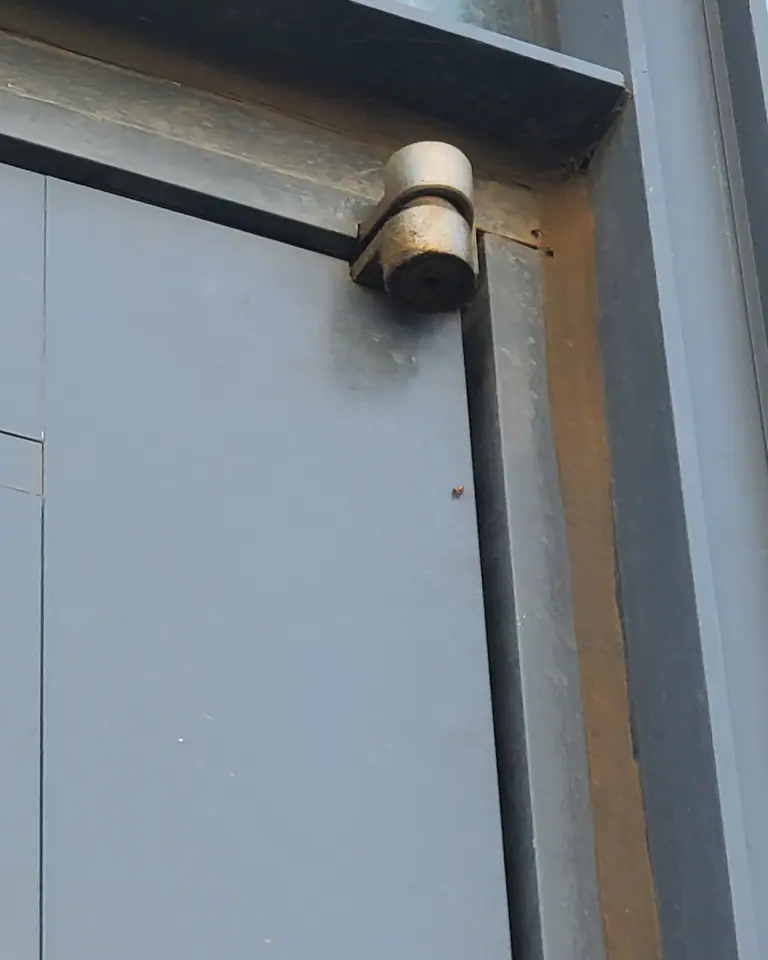
Describe the contact
Unlike residential doors that hang from three side hinges, most commercial aluminum glass doors rotate on a top and bottom pivot set. The bottom pivot assembly sits at the threshold and carries the full vertical weight of the door on an internal ball bearing or hardened steel spindle, while the top pivot holds the door upright in the header. When that bottom bearing crushes from heavy foot traffic, water, and road grit, or the top pin wears its bushing oval, the entire door leaf tilts away from the hinge jamb.
Before you call for service in Tysons, McLean, or Vienna, watch where the door makes contact as it swings shut. Note whether the bottom lock-side corner drags across the aluminum threshold, whether the vertical lock stile hits the strike jamb before the door closes, or whether the deadlatch bolt now sits too low to enter the keeper slot. Also note whether the top hinge corner moves in and out when you gently push on the pull handle. Leave the door on its pivots rather than loosening set screws while the glass leaf is under load.
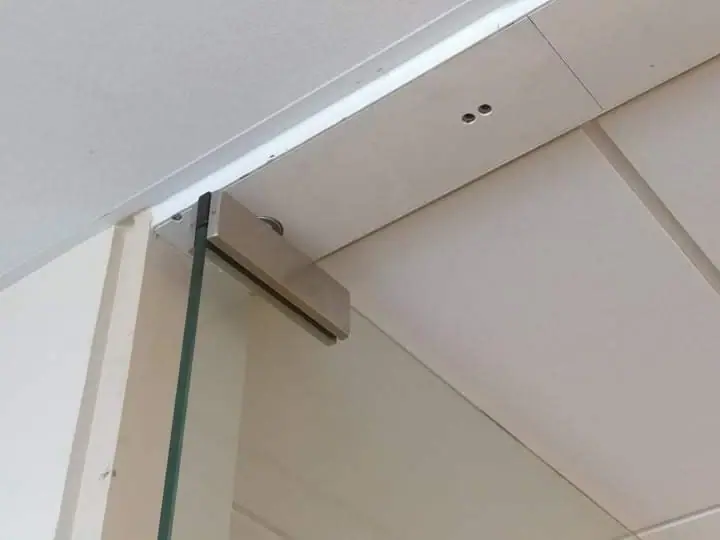
Check the assembly
Simply bolting a new offset pivot onto a chewed-up aluminum door rail or a rusted steel sub-frame will not hold alignment for long. When a commercial door has been allowed to sag and drag for months, the leverage of people forcing it open often wallows out the tapped screw holes inside the door web or cracks the internal tie-rod corner bracket. During an inspection, the technician unhangs the door leaf to check the condition of the bottom rail, the threshold anchor plate, and the header pocket.
If the aluminum mounting surface is still solid, replacing the worn top and bottom 3/4-inch offset pivots (or servicing a center-hung floor closer spindle) and adjusting the vertical height screw restores factory clearances around the perimeter. If the frame or door stile is torn out at the pivot mortise, installing a full-height continuous geared hinge (often called a piano or Roton hinge) distributes the door's weight evenly along the entire vertical jamb and permanently stops the sag.
| Hardware style | How it supports the door | Common failure and repair |
|---|---|---|
| 3/4-inch offset pivot set | Frame-mounted bottom bearing and top pin offset from the door face | Bottom bearing collapses or top pin shears; replace matched top and bottom pivot set |
| Center-hung pivot and floor closer | Recessed bottom spindle inside the threshold or cement floor box | Rusted floor box spindle or worn top walking-beam pivot; replace pivot arm or rebuild floor unit |
| Intermediate offset pivot | Mid-height pivot added on tall or heavy commercial entrances | Misaligned with top and bottom pivots, causing bind; realign and replace as a matched set |
| Continuous geared hinge conversion | Full-height aluminum geared hinge running from header to threshold | Used when original pivot mortises or frame mounting holes are stripped beyond standard pivot repair |
Plan the work
Commercial entrance pivots, heavy frameless glass patch fittings, and residential shower-door pivots use completely different load ratings and mounting geometry. When scheduling a repair, share a clear photo of the top corner and bottom threshold corner of the hinge side, along with your business hours and whether the doorway is a required exit path. That lets our crew bring compatible commercial hardware and keep the entrance safe while the door leaf is off the frame.
Service for this problem
Commercial door closer and pivot repair
A door that slams, drags, or closes inconsistently may have a closer, pivot, alignment, or related hardware problem.
Also see: Commercial door repair.
More guides
-
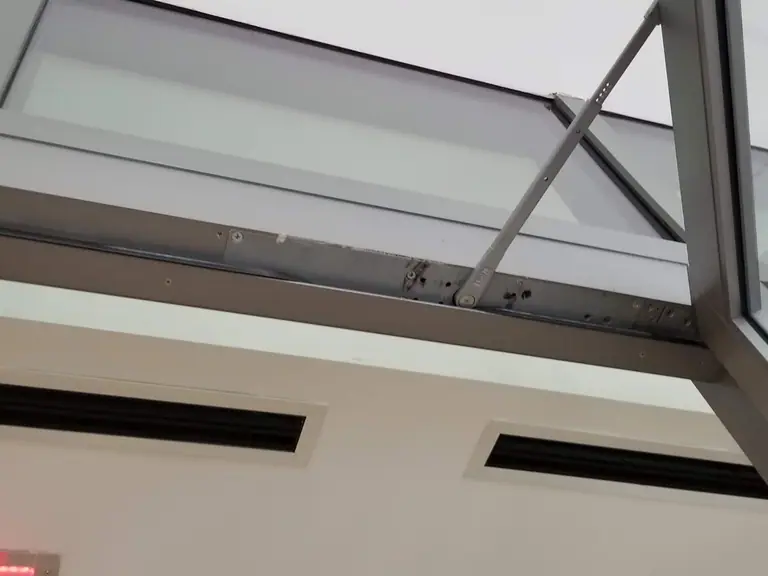
Door closer problems: slamming, leakage, and closing faults
A door closer controls part of the door's closing movement, but a slamming or incomplete close may involve more than the closer.
-
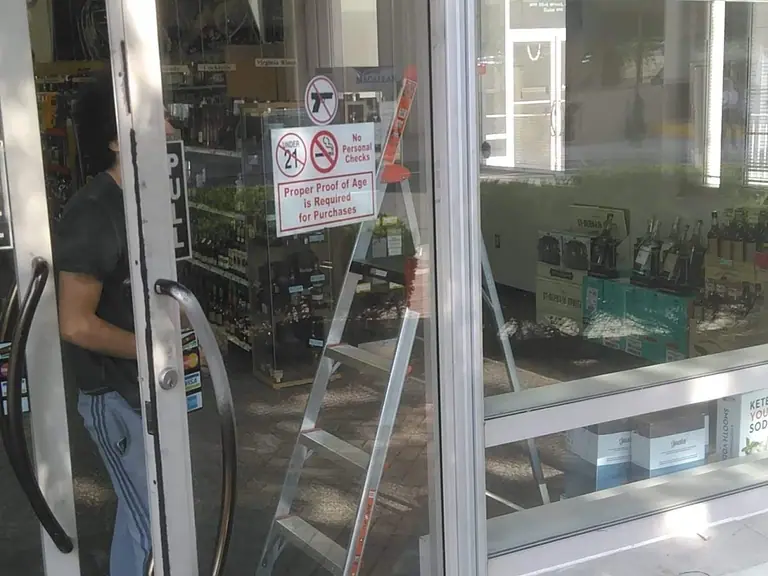
Commercial glass door problems: what to report before a repair
Describe the door's behavior and any visible damage before selecting a repair.
-
Storefront doors: when hardware repair or replacement needs assessment
A storefront entrance needs assessment of the door, frame, glass, and hardware together.